Florals Digital Patterns Pop Art: A Versatile Tool for Creative Projects
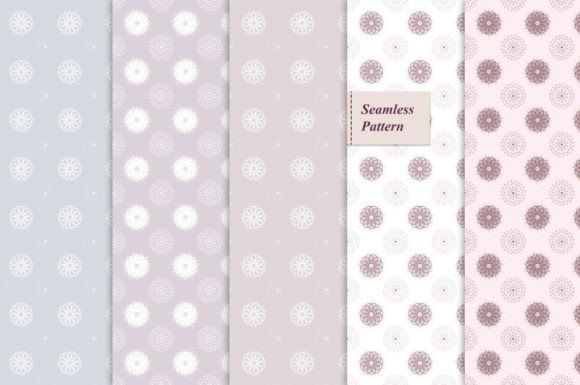
Florals Digital Patterns Pop Art is a dynamic and adaptable resource that empowers creators to bring their visions to life with ease. Designed in Adobe Illustrator, this seamless pattern set caters to a wide range of crafting needs, from digital design to physical printing. Whether you're working on stationery, greeting cards, t-shirts, or mugs, these patterns provide a foundation that can be customized to fit your unique style and project requirements.
Understanding the Design and File Formats
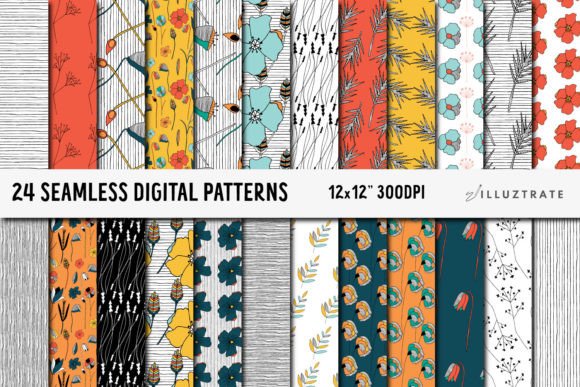
The Florals Digital Patterns Pop Art bundle includes 24 JPEG files, each supplied in a large 12×12” format at 300dpi resolution in RGB color mode. This high-resolution format ensures that the designs maintain clarity and detail even when scaled up for large-format printing or sublimation processes. The files are also easily scalable down to meet smaller crafting needs, making them suitable for both professional and personal projects.
The use of JPEG format offers flexibility across various platforms and software applications. These files can be imported into graphic design tools like Photoshop, Illustrator, or Canva, as well as used directly in digital publishing or print-on-demand services. This compatibility makes it simple to integrate the patterns into existing workflows without requiring complex conversions or additional file preparation steps.
Integration into Creative Workflows
Florals Digital Patterns Pop Art can be incorporated into different stages of a creative process. Before starting a project, designers can explore the available patterns to find one that aligns with the intended aesthetic and theme. This early integration helps streamline the design phase by reducing the need for custom illustrations or sourcing new assets.
During the creation process, these patterns serve as a base layer that can be manipulated, layered, or combined with other design elements. For instance, a greeting card designer might use a floral pop art pattern as a background and overlay text or images on top. Similarly, a product designer could apply the pattern to fabric or ceramic surfaces using sublimation printing techniques.
After completing a project, the patterns can be repurposed for future creations. Their versatility allows them to be used in multiple formats—digital, printed, or sublimated—ensuring that they remain valuable long after the initial project is finished. This reusability enhances efficiency and reduces the time spent sourcing new materials for subsequent projects.
Practical Implementation Tips
To maximize the usability of Florals Digital Patterns Pop Art, consider organizing the files into clearly labeled folders based on project type or color scheme. This organization facilitates quick access and retrieval when working on multiple projects simultaneously. Additionally, keeping backup copies of the original files ensures that you can revisit and reuse the patterns without losing quality.
When preparing the patterns for use, ensure that the resolution and color mode match the requirements of your output medium. For example, if you plan to use the pattern for sublimation printing, confirm that the printer supports RGB files and that the image size is appropriate for the substrate being used. If the pattern will be used for digital display purposes, optimizing the file size for web compatibility may be necessary.
Another useful tip is to experiment with how the patterns interact with other design elements. Combining them with solid colors, gradients, or textures can yield unexpected and visually appealing results. Testing different combinations in a design mockup before finalizing a project can help identify the most effective layout and visual balance.
Use Cases and Workflow Examples
One common use case for Florals Digital Patterns Pop Art is in the production of personalized stationery. A small business owner might use the patterns to create branded notepads or thank-you cards that reflect their brand identity. By applying the pattern to the background and adding company logos or custom typography, they can produce cohesive and professional-looking stationery without the need for custom illustration work.
In the context of event planning, these patterns can be used to design signage or promotional materials. A wedding planner, for example, could use a floral pop art pattern as the basis for table numbers, place cards, or banners. The vibrant and eye-catching nature of the patterns helps draw attention and enhance the overall aesthetic of the event space.
For educators or content creators, Florals Digital Patterns Pop Art can be integrated into learning materials or blog posts. Teachers might use the patterns to create visually engaging worksheets or flashcards, while bloggers could incorporate them into infographics or social media graphics. This adds an element of creativity and visual interest that can improve engagement and retention among audiences.
Considerations for Long-Term Use
When considering long-term use of Florals Digital Patterns Pop Art, it's important to evaluate how frequently the patterns will be accessed and modified. Regularly updating your design library with new patterns or variations can help keep your creative toolkit current and relevant. Additionally, maintaining a consistent naming convention and folder structure can make it easier to locate specific patterns when needed.
Quality control is another key factor to consider. When using the patterns for commercial purposes, ensure that the final output meets industry standards for resolution, color accuracy, and durability. Testing prints or samples before mass production can help identify any potential issues and prevent costly mistakes later on.
Finally, staying informed about new design trends and technological advancements can help you make the most of Florals Digital Patterns Pop Art over time. As new tools and platforms emerge, exploring how they can be used in conjunction with these patterns can open up new possibilities for creative expression and innovation.